
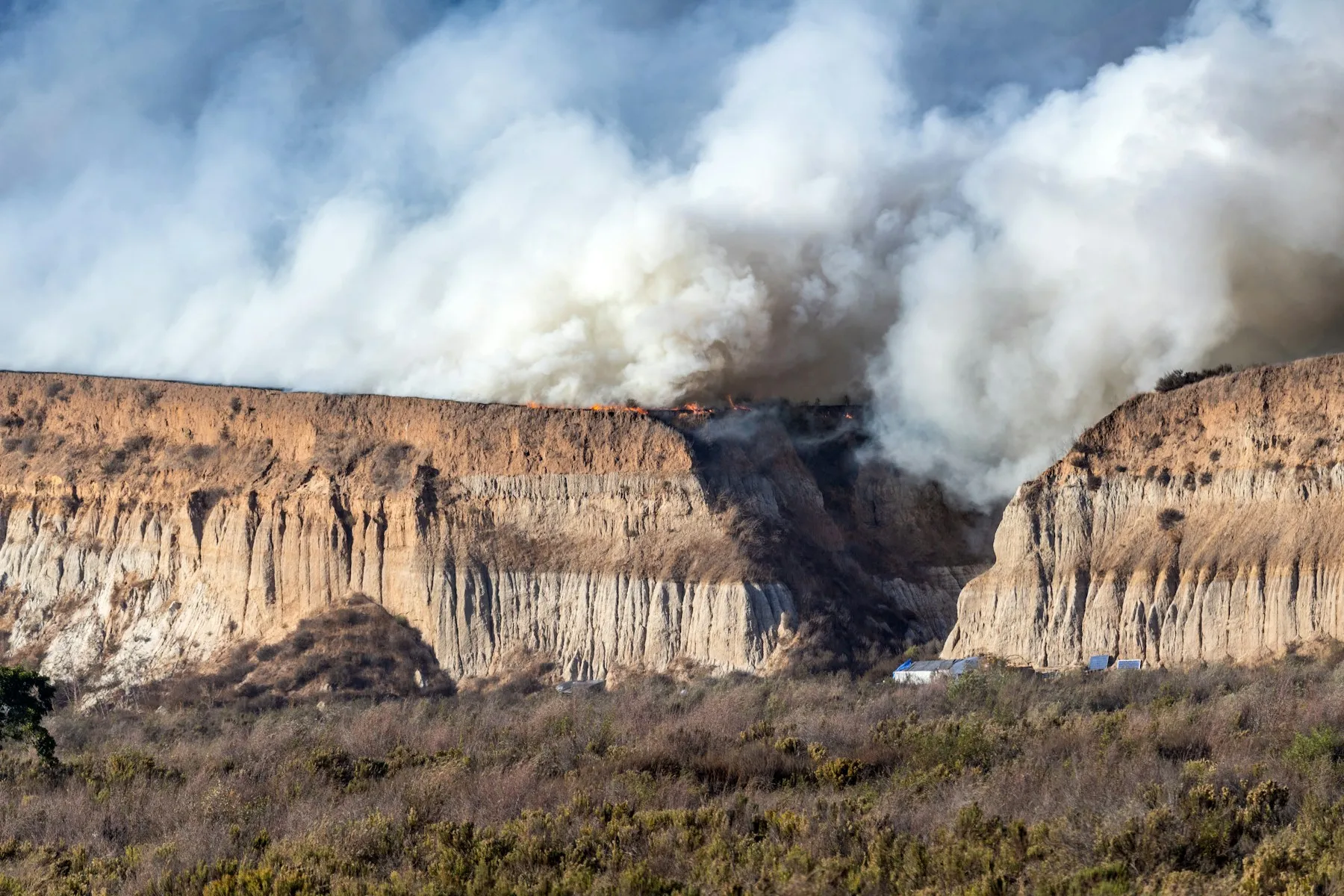
In Santa Clarita Valley, many owners wait for visible overgrowth before booking service. The problem is that heavy growth and high-demand scheduling often collide with hotter, drier periods when field conditions are less forgiving.
A better strategy is to plan brush and vegetation work with safety conditions in mind, not only calendar convenience.
This guide is practical and safety-focused. It does not provide legal directives. As of February 21, 2026, always verify current restrictions, notices, or operational rules with official agencies.
What homeowners usually mean by “red-flag days”
Most people use this phrase to describe periods with elevated fire-weather concern, typically tied to wind, heat, and low humidity conditions. From a planning perspective, the takeaway is simple: harder conditions can increase operational risk and scheduling uncertainty.
Even if your project is straightforward, extreme weather windows can change how work is approached or delayed.
Why timing affects more than convenience
Safety-aware scheduling influences:
- Crew productivity and pacing.
- Access and footing conditions on slopes.
- Debris handling and staging decisions.
- Potential delays in high-risk weather windows.
If your property requires steep-slope work or longer haul paths, timing can materially affect both risk management and schedule reliability.
Practical pre-scheduling checklist
Before requesting dates, gather these facts:
- Terrain type (flat, moderate slope, steep).
- Access limitations.
- Vegetation type and density.
- Debris management preference.
- Flexibility window for scheduling.
The more clearly you communicate this, the easier it is for a pro to recommend safer scheduling options.
Safe clearing mindset for homeowners
Homeowners are not expected to run jobsite operations, but a safety-first mindset still helps:
- Prioritize near-structure and high-risk continuity areas first.
- Avoid compressing large scope into one high-pressure date.
- Plan phased work if your parcel is complex.
- Keep communication open on weather-related schedule shifts.
This approach reduces rushed decisions and helps maintain quality.
Avoid unsourced legal assumptions
One common mistake is assuming a social-media post or neighbor comment equals a current rule. It may not.
If your plan depends on “what is allowed this week,” verify with official sources directly. This is especially important when weather conditions are changing quickly.
As of February 21, 2026, CAL FIRE preparedness resources and LA County Fire program pages are strong starting points for public-facing guidance.
How to structure your quote request for safer planning
Instead of “Need brush cleared ASAP,” use:
- “Need near-structure priority work first.”
- “Slope access is limited on rear section.”
- “Open to phased schedule if conditions change.”
- “Please include debris plan in quote.”
This signals that you care about scope quality and safe execution, not just speed.
What to ask during quote conversations
Ask these questions clearly:
- Which areas should be prioritized if weather windows tighten?
- What scope can be completed safely in one visit?
- What tasks should be phased to a second visit?
- How does debris handling affect timeline?
- What weather factors typically trigger schedule adjustments?
These questions produce better planning than asking only for a single completion date.
Planning for both brush clearance and defensible space
Many Santa Clarita properties need a combination of tasks. Use both service pathways when needed:
- Brush Clearance for broader overgrowth reduction.
- Defensible Space for structure-adjacent zone-focused planning.
A combined request helps professionals define priorities when weather conditions are variable.
Example phased plan for a mixed-condition lot
A practical phased approach may look like:
- Phase 1: Near-structure risk reduction + key access corridors.
- Phase 2: Broader slope or rear-edge reduction.
- Phase 3: Cleanup refinement and maintenance schedule setup.
This can be more resilient than trying to force complete parcel reset into one high-risk weather window.
Communication tips that reduce delays
Homeowners who get smoother outcomes usually do three things:
- Provide photos from multiple angles.
- Respond quickly when clarification is requested.
- Stay flexible on short weather-driven date shifts.
In high-demand seasons, those habits can matter as much as budget.
Local context: why this matters in SCV
Santa Clarita Valley parcels vary widely across neighborhoods. A tract lot in one area may be straightforward, while another lot nearby may have difficult rear-slope sections and limited staging options.
That is why local context in your request matters. Mention your area page when relevant, like Saugus or Canyon Country, and include brief terrain notes.
Referral model reminder
This site is a referral and marketing service. It routes requests to independent local professionals. Final methods, timeline, and onsite decisions are determined by the professional handling the project.
Your role is to provide clear inputs, verify official guidance when relevant, and compare scope details thoughtfully.
Need help now? Call (661) 239-3064, text (661) 239-3064, or request a quote.
Bottom line
Red-flag awareness is not about panic. It is about better planning: prioritize high-impact areas, keep scope realistic, and align scheduling with safer conditions whenever possible.
This post is informational and not legal advice. Always follow your local AHJ requirements.